
How Glassware Is Made
A behind-the-scenes look at our manufacturing process — from raw silica sand to finished, branded drinkware ready for your shelves.
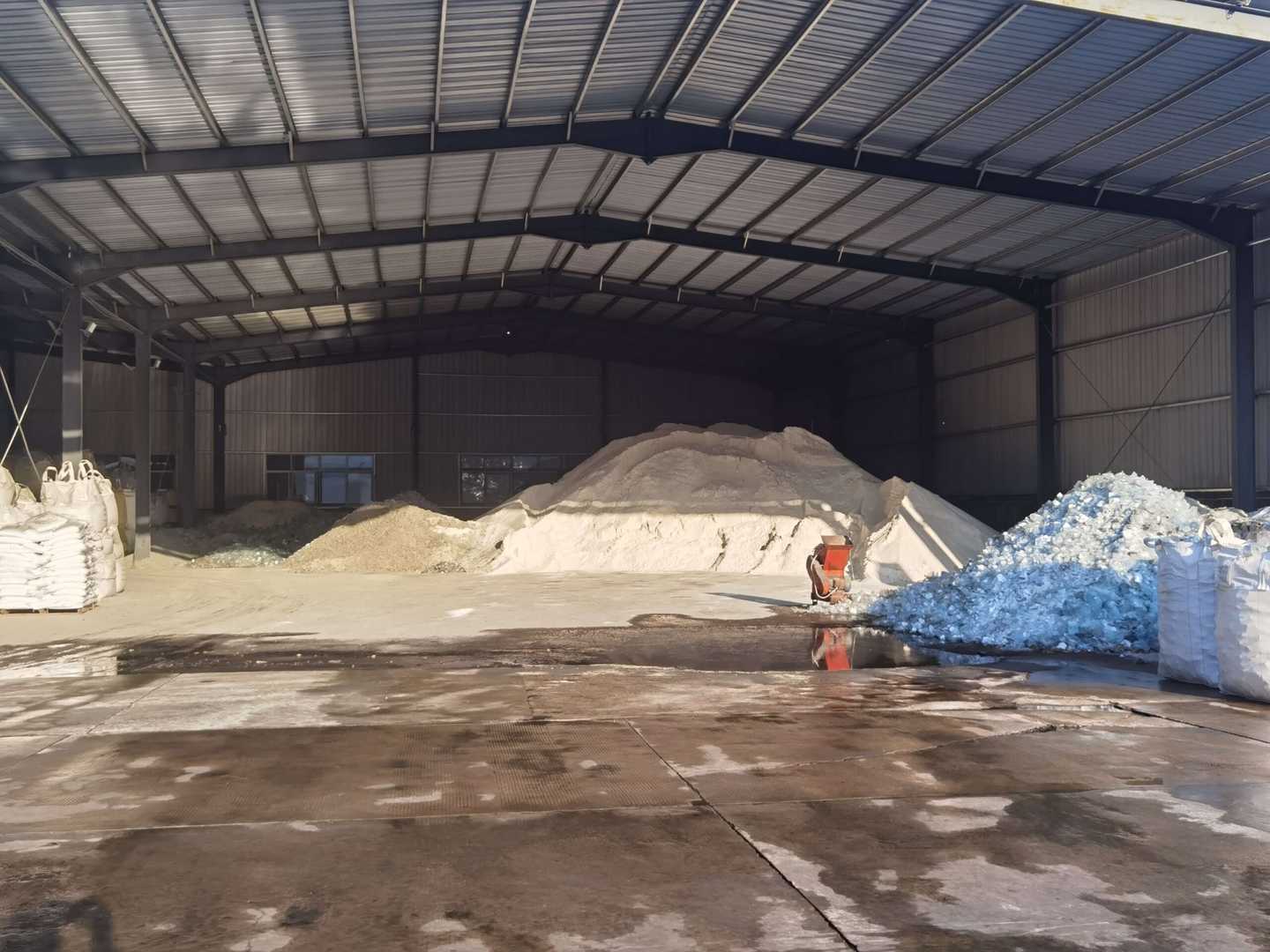
Raw Materials Preparation
The main raw materials used in glass cup production are silica sand, soda ash, limestone, and cullet (recycled glass). These are blended in carefully controlled proportions to produce soda-lime glass — the most common material for drinkware.
For specialized products, additional compounds are introduced during batching. Colorants create tinted glass; specific mineral additions produce heat-resistant borosilicate glass with superior thermal stability.
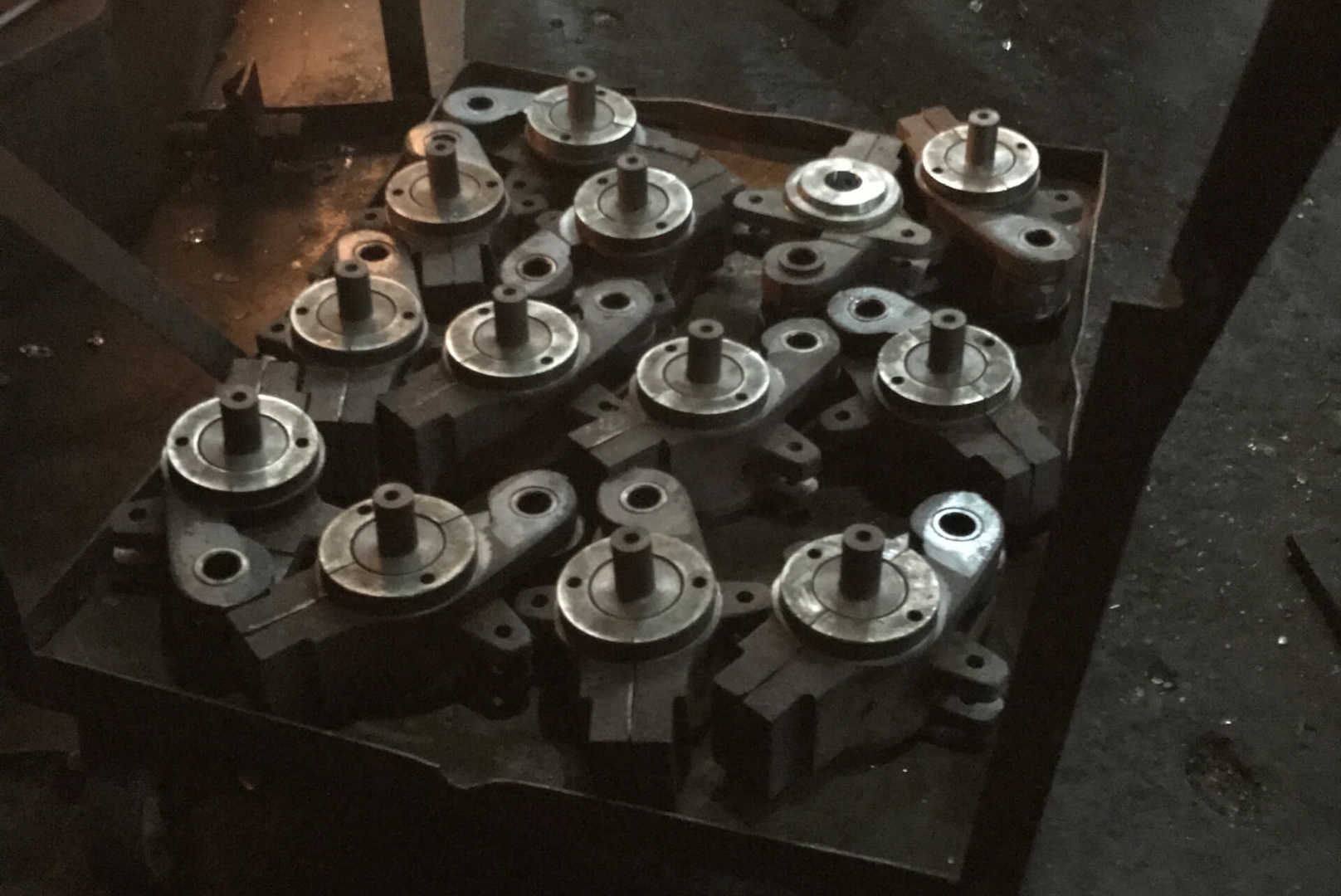
Mold Installation
Before production begins, the correct mold is selected based on the product's design and specifications, then installed into our automated glass-forming equipment.
The mold is the master template for every piece. It directly determines the cup's shape, wall thickness, weight, texture, and overall finish — ensuring consistent reproduction across the entire production run.
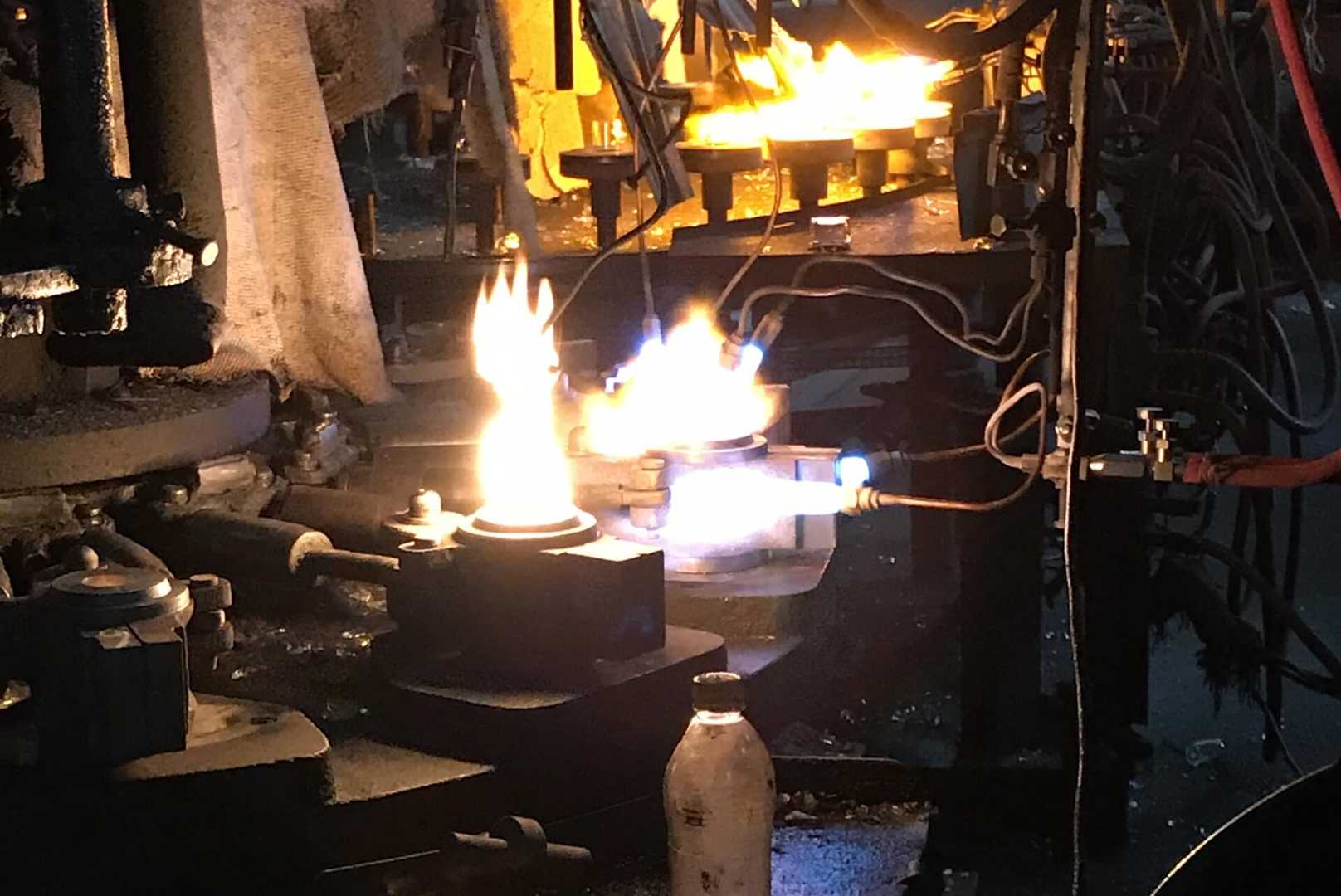
Melting & Forming
Raw materials are heated in a high-temperature furnace at approximately 1,600°C. Moisture evaporates, organic impurities burn off, and the remaining materials fuse into homogeneous molten glass. The melt is then conditioned to the precise viscosity required for forming.
The molten glass is distributed into molds via automated forming machines. Each cavity is filled with an exact gob of molten glass, which is pressed or blown into its final shape within milliseconds.
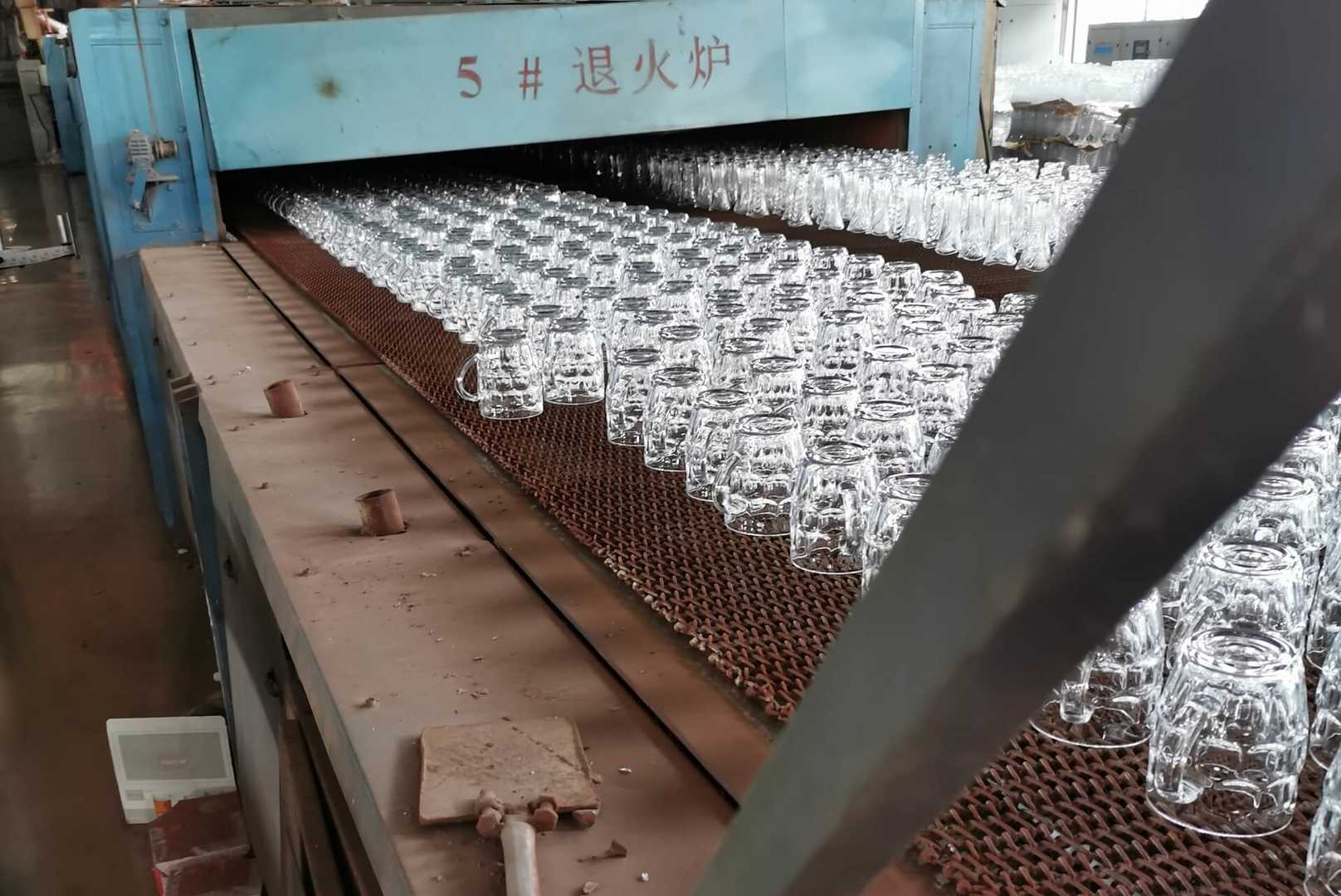
Annealing & Cooling
Freshly formed glass cups carry significant internal stress from the rapid shaping process. They are immediately conveyed into a long annealing kiln with precisely controlled temperature zones.
Inside the kiln, the glass is reheated and then slowly cooled below the strain point. This controlled process relieves internal stress, preventing future cracking, and gives the finished piece its structural strength and thermal stability.
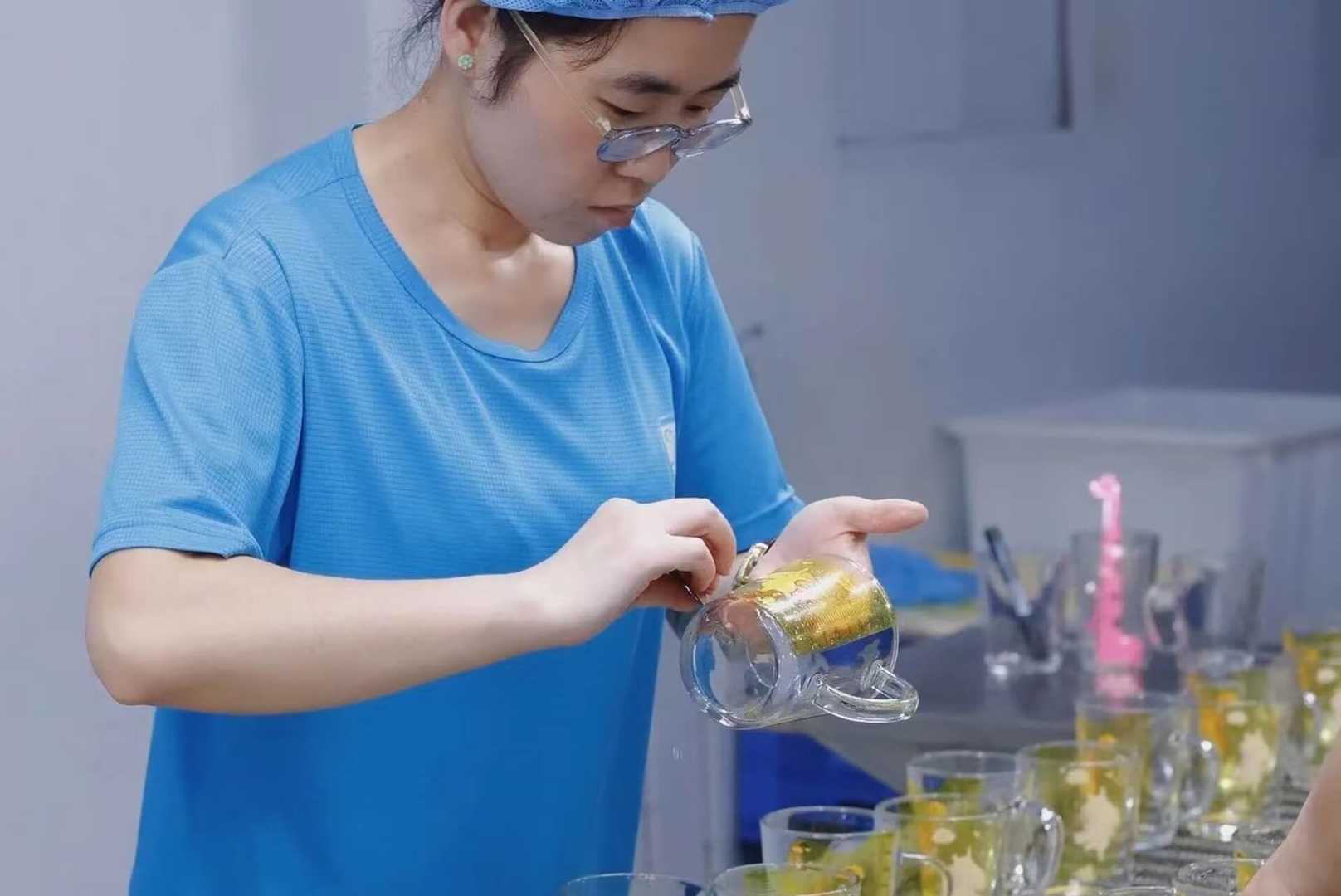
Surface Treatment & Decoration
Once annealed and inspected, glass cups can be finished with a wide range of decorative and functional surface treatments tailored to your brand requirements.
Available decoration methods:
Screen printing · Fired decals · Digital printing
Sandblasting · Acid etching · Hand painting
Spray coating · Gold / silver rim · Electroplating
Frosting · Crackle finish · Laser engraving
Ready to Order Custom Glassware from the Factory?
MOQ 500 pcs · Free Sample Before Mass Production · Reply Within 24 Hours