
Introduction: The Question Every Buyer Asks
Walk through any modern glass factory and you'll see machines producing thousands of identical pieces per hour—faster and more precise than any human hand.
So why do premium glass products still carry the mark of hand blowing?
For B2B buyers, this isn't just a philosophical question. It's a practical one:Can handmade glass actually be produced at scale, on time, and to consistent quality standards?
The answer is yes—but only when handcrafting is supported by a complete industrial system.
📌Read our previous article: Are Bubbles in Hand-Blown Glass a Defect?
Machine vs. Hand: A Division of Labor
Machines excel at high-volume standardization. Handcrafting excels at unique, irreplaceable texture. For consumers, that slight variation in thickness or subtle ripple is the entire point.
But for procurement managers, texture alone doesn't close a purchase order. The real questions are: Can you deliver 5,000 pieces? Can you repeat the order six months later?
These questions don't have "handmade" or "machine-made" answers. They havesystem answers.
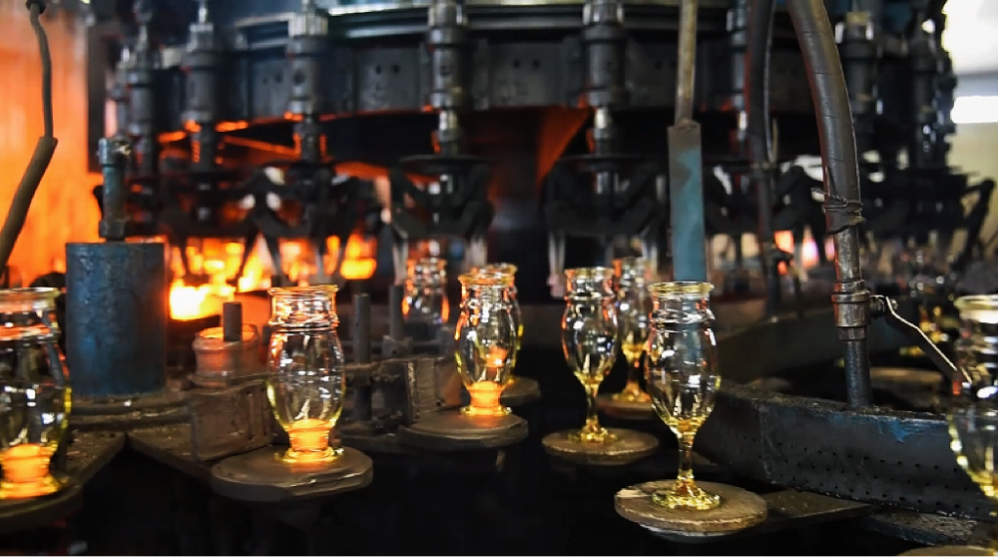
The Real Difference: Industrial Infrastructure Behind Handcrafting
Here's what most buyers don't see. "Handmade" only applies to the forming stage. Everything before and after follows strict industrial protocols:
Melting & Gathering:Controlled glass composition for consistent clarity.
Hand Blowing:The "texture" stage—where uniqueness is born.
Annealing:Slow cooling to relieve stress and prevent breakage.
Inspection:Defects removed—regardless of the "handmade" label.
A mature handmade glass operation doesn't relax quality standards because of the word "handmade." It applies standardsaround the handmade process.
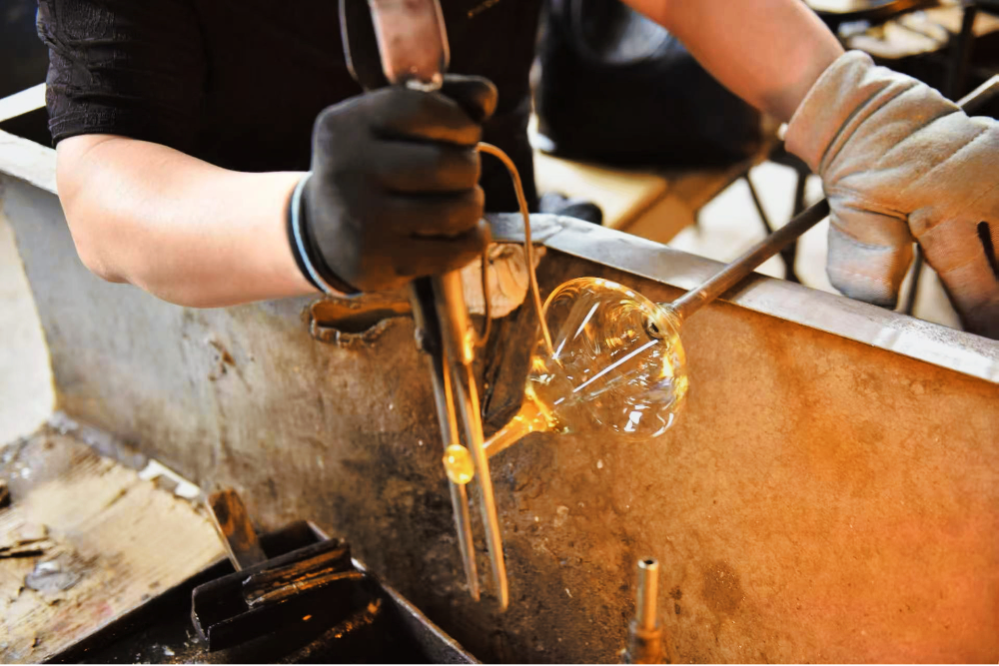
The Moment That Defines Hand-Blown Glass
If you visit a production floor, the finished products aren't what capture your attention. It's the moment of creation.
A craftsman gathers molten glass from a 1,000°C+ furnace. The glass glows orange. It's rolled, rotated, and then—a breath. The glass expands. Air, rotation, and hand pressure combine. A cup or vase emerges.
It looks simple. It isn't. The craftsman reads the glass in real time—its temperature, its viscosity. Every adjustment is based on years of experience. This is not repetition. It'sexperience meeting materialin a window of seconds.
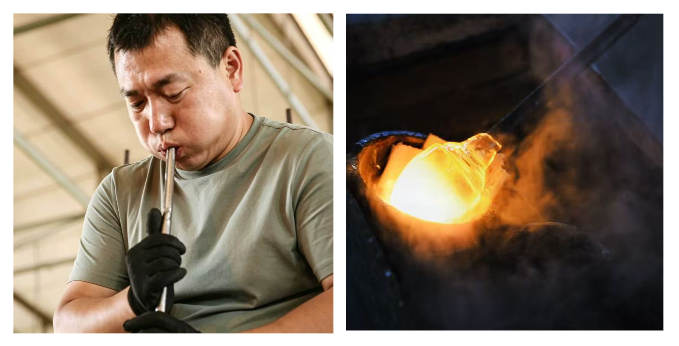
📌Watch the hand-blowing process in action.
Can Handmade Glass Handle Bulk Orders?
Yes—if the supplier has the right infrastructure. Here is what B2B buyers should look for:
Consistent raw materials:Controlled silica and colorants.
Trained teams:A team following the same protocols is a production system.
Mold standardization:Ensuring dimensional consistency across batches.
Export-grade logistics:Engineered packaging for international shipping.
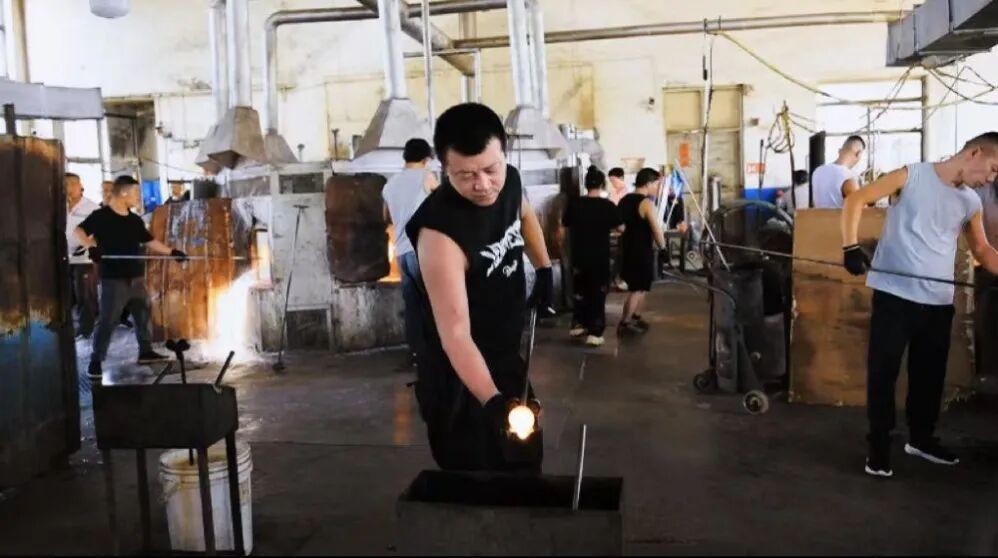
Handcrafting with Industrial Reliability: The Vesselia Glass Approach
For 15 years, Vesselia Glass has operated at the intersection of traditional craftsmanship and modern manufacturing. We don't choose between handmade and industrial. We combine them.
Traditional hand-blowingfor premium texture.
Industrial melting, annealing, and QCfor consistency.
Proven deliveryto 80+ countries and regions.
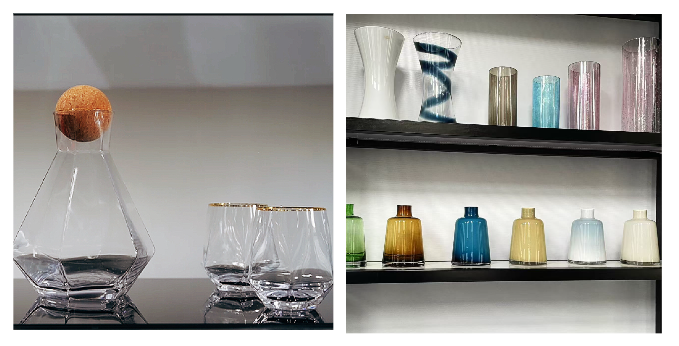
📌Learn more about our 15-year manufacturing journey. | Discuss your next handmade glass order with our team.
Conclusion: Handmade Has a Place—When Backed by Standards
The future of glass manufacturing isn't machineorhandmade. It'shandmade texture, industrial reliability.
For buyers, the question isn't "Can handmade glass scale?" It's "Does my supplier have the system to make it scale?" If the answer is yes, handmade glass isn't a niche product. It's a competitive advantage.
📌Explore our hand-blown glass collection or request samples for your next project.
